I wrote a diary for
twenty years.
Then I couldn't anymore.
DailyVox is a free voice journal for iPhone and Android with on-device AI, built by Karthikeyan NG. I stopped writing — and started talking. That's how DailyVox was born, and why it runs entirely on your phone instead of someone else's server.
The problem.
contextI kept a diary for over 20 years. Almost every day, I sat down and wrote about my life. It wasn't discipline — it was just something I did. Like brushing my teeth.
Then, in recent years, I started missing days. One day missed. Then a week. Then I'd look back and realize I hadn't written anything in a month. The habit that had been part of my life for two decades was disappearing, and I could feel it happening but couldn't stop it.
I tried different apps. Different formats. Different routines. Nothing stuck. Writing every day had become a chore. And when something becomes a chore, you stop doing it.
The moment.
insightThen I tried speaking instead of writing. And everything changed.
When you speak, you don't worry about grammar. You don't edit yourself. You don't stare at a blank page wondering what to say. You just talk. About your day. About what's on your mind. It flows — naturally, honestly, quickly.
Two minutes of talking captures more than ten minutes of typing. And it feels nothing like a chore.
“Twenty years of writing in diaries, and the solution to keeping the habit alive was to stop writing.”
Building DailyVox.
decisionThe problem was: there was no good tool for voice journaling I could trust with my most private thoughts. Every app I found either sent my audio to cloud servers for processing, or charged a subscription, or both.
I'm a developer. So I built my own.
DailyVox is simple at its core: open the app, press record, talk about your day — and SFSpeechRecognizer transcribes everything on-device with requiresOnDeviceRecognition = true. No cloud. No servers. No account. No subscription. Your voice literally never leaves your phone.
AI tools made this possible as a solo developer. What would have taken a team and months a few years ago, I shipped from idea to the App Store in a fraction of the time. That's the power of this moment in technology — one person with the right tools can build something real.
The Digital Twin vision.
north starAfter I started building DailyVox, I realized it could go far beyond just recording voice entries.
If you talk to this app every day — about your thoughts, your decisions, how you react to things, what makes you happy, what frustrates you — it builds a picture. A detailed, honest picture of who you are.
That's when I built the Twin. A multi-dimensional model of communication style, emotional signature, a personal knowledge graph of people and topics, and temporal mood predictions. All derived on-device from NLTagger signals. All serialized as Codable JSON in a single Core Data entity. All yours.
“I want the Twin to eventually act like you. Speak like you. Respond like you. A true digital version of yourself — private, on-device, yours.”
We already leave digital traces everywhere — social media, messages, emails. But all of that is scattered across platforms owned by other companies. None of it is organized. None of it is truly yours.
What if you had one place where you deliberately stored the most honest version of yourself? Not the curated version you put on social media. The real version.
I believe keeping a digital version of yourself will be an important part of the near future. Not science fiction — practical. And DailyVox is built to make that happen.
Why iPhone first.
platformDailyVox is on the App Store for iPhone and iPad, and on Google Play for Android 13 or newer. The Android app is at version 1.0, on a version line of its own.
iPhone came first deliberately. Apple hands you the Secure Enclave, the Neural Engine and a whole on-device AI stack, and the promise of DailyVox is that your data never leaves your device. I wanted to be certain I could keep that promise before taking it anywhere else.
Android turned out to be a harder version of the same problem, and a more interesting one. There is no system sentiment API and no system name recogniser, so both had to be rebuilt and then measured against the Apple frameworks they replace rather than assumed to be close enough. On the diary text I tested, both replacements came out ahead.
The condition was never negotiable: the Android app requests no internet permission at all, and Android's automatic backup is disabled so the journal is not copied to Google Drive. Not "we choose not to call a server" — the permission is absent, so no build could send your journal anywhere even if it tried. You can check that in Android Settings › Apps › DailyVox › Permissions without trusting a word of this page.
Android 1.1 does not have everything the iPhone app has: it is English only, it has no on-device chat with the Twin and no health data. The roadmap says where each platform actually stands.
What I believe.
principlesPrivacy is the architecture.
Not a feature. Not a toggle. The entire stack is built so your data physically cannot leave your device.
Mental health tools should be free.
A diary shouldn't have a paywall. Nobody should choose between their wallet and their mental health.
AI should work for you, not on you.
AI that processes your thoughts should run on your device, under your control. Not on a server training someone else's model.
Speaking is more honest than writing.
When you write, you edit. When you speak, you're real. The best insights come from unfiltered expression.
The roadmap.
build logVoice journaling + on-device AI
Tech: SFSpeechRecognizer (requiresOnDeviceRecognition = true) for zero-network transcription. NLTagger for sentiment, NER, POS. NSPersistentCloudKitContainer wrapping SQLite. AVFoundation AAC 44.1 kHz capture. CryptoKit AES-256-GCM backups. LocalAuthentication for Face ID / Touch ID. WidgetKit + AppIntents. All inference on Neural Engine.
Twin + personality model
Tech: Custom TwinEngine. CommunicationStyle (TTR, expressiveness, directness, formality, signature words). EmotionalSignature (valence / arousal / dominance baselines, time-based patterns, trigger topic correlations). PersonalKnowledgeGraph via NER mapping entities with emotional weights. TwinPredictions for day-of-week mood forecasting. All models as Codable JSON in the Core Data AIState entity.
Ask Your Twin + social sharing
Tech: TwinChatView with pattern-matched query system. TwinResponseGenerator assembles natural-language replies from Twin data. ShareablePersonalityCardView renders cards via SwiftUI ImageRenderer at 3x (Instagram Stories 1080×1920, X 1200×675). UIActivityViewController for native share sheet. SKStoreReviewController at milestone entries with 90-day cooldown.
Constellation Update + Dynamic Island
Tech: SwiftUI Canvas-rendered constellation (every entry becomes a mood-coloured star, 60 fps). Celestial onboarding flow with star-birth welcome. Ivory theme + sage/terracotta/gold palette. SF Rounded typography. ActivityKit Live Activities for the Dynamic Island — recording timer, "new star appeared" celebration, opt-in streak indicator. Lock Screen Constellation widget via WidgetKit. iOS 18 dark + tinted app icon variants.
The warm redesign
Design: a complete visual rework to a warm, calm palette — sage, gold, and terracotta on ivory — across every screen, with the Digital Twin moved to the center of the app. SF Rounded typography, warmed light and dark themes, refined onboarding, and a polished Journal. v1.4.1 made onboarding voice-first: the final welcome step invites you to speak your first entry, and your own words become the first star in your constellation.
Body Twin — HealthKit
Tech: HealthKit reads sleep, HRV (SDNN), resting heart rate, steps, mindful minutes — all on-device, "Data Not Collected" label preserved. Per-entry HealthSnapshot in Core Data (~10 floats), each tagged with activity context detected via HKWorkoutSession + CMMotionActivity, so a workout isn't read as emotional stress. HR is stored as a delta from your personal hour-of-day baseline. Every captured signal waits in a review-and-discard queue before it reaches the Twin. The Apple Watch companion — wrist recording and heart rate sampled during the entry — is the next step in Body Twin, not part of this release.
Memory, measurable fidelity & the first ambient signals
Tech: semantic search over per-entry NLEmbedding sentence vectors (device-local index, meaning not keywords, with a measured abstention threshold so it declines rather than guesses). A first learned trait — openness — from a small on-device model validated on consented human writing, surfaced only past a data floor with an honest confidence. Per-prediction confidence bands. Voice biomarkers (pace/energy/pause/pitch → an "activated vs your own normal" arousal signal). Ambient Signals (folded in from v1.5.5): on-device Vision photo scene labels + music-library mood, through a review-and-discard queue — derived labels only, off by default. Plus a Spoken Words vocabulary so mis-heard names stick, and SpeechAnalyzer transcription on iOS 26. All measured against honest baselines; zero network calls.
Foundation Models + tool calling
Tech: Apple's on-device 3B Foundation Model via LanguageModelSession, grounded on the v1.6 memory index. The model never emits free prose — it emits a structured answer whose every factual sentence must cite a journal entry or a measured Twin signal, with citations constrained per turn so citing an unretrieved entry is impossible, and a deterministic audit checks every answer before it renders (a failed answer falls back to the classic chat). Read-only evidence tools via the Tool protocol; @Generable structured outputs; an adversarial evaluation battery (grounding, tone, false-premise and injection resistance) that the release passed twice consecutively. Requires an Apple Intelligence iPhone; the classic chat remains everywhere else. Zero network calls.
A Twin that actually answers — and a research pilot
Tech: v1.7's retrieval scored realistic questions against real entries at cosine 0.02–0.25, below the 0.37 abstention threshold, so the chat abstained on almost every genuine diary question while working in demos. Retrieval is now hybrid — per-sentence embedding similarity plus content-word overlap — with a re-measured threshold (τ=0.29, 98.2% balanced accuracy on an eval leg authored from this exact failure). Unrelated questions still abstain honestly. Plus a consented research pilot: opt-in participants can record a one-tap emotion label after each entry, on-device, leaving the phone only through an export they initiate.
The Twin gets a voice — and the app gets usable by people it had locked out
Tech: AVSpeechSynthesizer read-aloud over voices already installed on the device, with a picker scoped to the user's language, deduplicated by name and ordered so an exact locale match sits first. No new permission, no entitlement, no enrollment. Apple's Personal Voice does carry a real accent, but it costs a ~30-minute, 150-sentence enrollment the app cannot perform for you — so accent here is approximated, not reproduced, and that is a deliberate stopping point rather than an oversight. Alongside it, an accessibility pass: Dynamic Type across 138 call sites, constellation labels lifted from 2.5:1 to 8.75:1 contrast, and VoiceOver values for the Twin Resolution ring and section picker.
The Twin speaks your language
Tech: Xcode String Catalogs, 358 strings in Spanish, French, German and Italian. Those four because every feature works fully in them — search by meaning needs on-device sentence embeddings, which Apple provides for a limited set of languages. Recording already worked in every language the iPhone can transcribe; this release changed the interface. Phone-first by conviction — no macOS or visionOS targets.
The Twin joins the system assistant — on your terms
Tech: Siri AI integration via App Intents — ask the system assistant and it consults your Twin. Cross-app context adoption as iOS 27 APIs open to third parties, with DailyVox's standing rule: context flows in, nothing flows out. Next-generation Apple Foundation Models for deeper reasoning and longer conversations.
Persona conditioning — Twin learns to think like you
Tech: Validated Big Five personality scoring from your journal narratives, grounded in language-based personality modeling research. Multi-tier persona conditioning — the measured profile plus your actual phrasings, retrieved from the semantic index, steer every Twin reply. Monthly personality snapshots power identity-evolution diffs and "talk to your past self." Fully on-device; no desktop training step, nothing ever leaves the phone.
A true digital version of you
End state: an on-device AI that acts like you, speaks like you, responds like you — built from years of your own entries. Full RAG. Persona conditioning grounded in your measured personality. Tool calling for data retrieval. Session transcript with context condensation. Encrypted. On your device. Exportable only by you. Your data never touches a server. Your digital self is yours alone.
Who built it.
the builderI'm Karthikeyan NG. I head engineering at Vision, a fintech and crypto platform in Dubai. Before that I founded two startups, wrote two books on machine learning, and won eighteen hackathons. Engineering degree out of Madurai, CSE '09.
I've spent most of the last decade shipping machine learning into production rather than writing about it — RAG pipelines, evaluation harnesses, agent guardrails. That is the reason DailyVox's Twin is built the way it is: I have seen how these systems fail, and most of what I know came from the hundreds of things I shipped that didn't work.
I've spoken about it at TEDx, at Google, at IIT Kharagpur, and in Seoul.
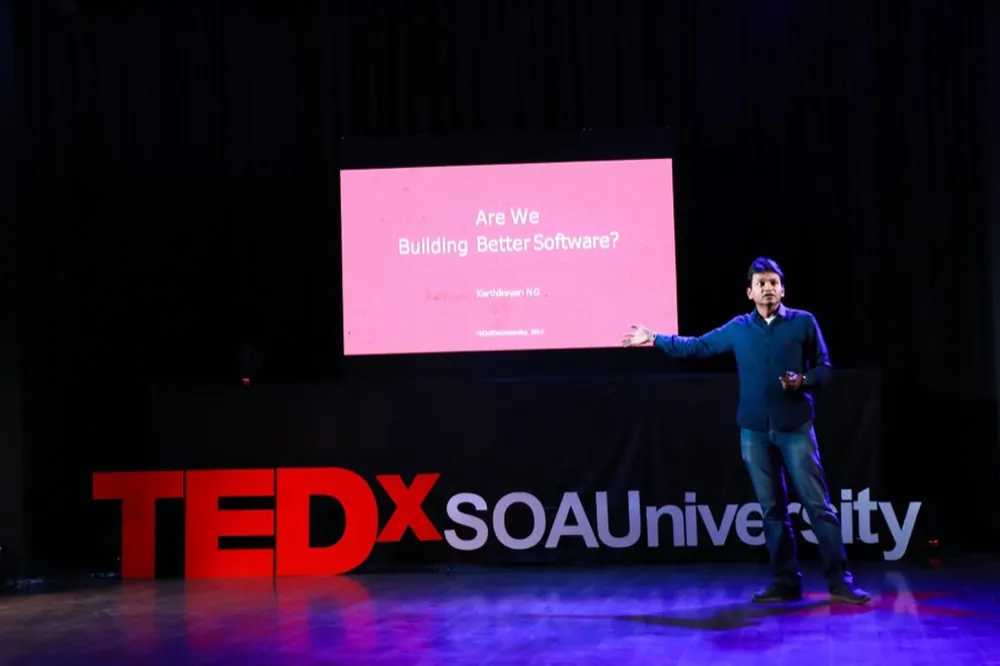
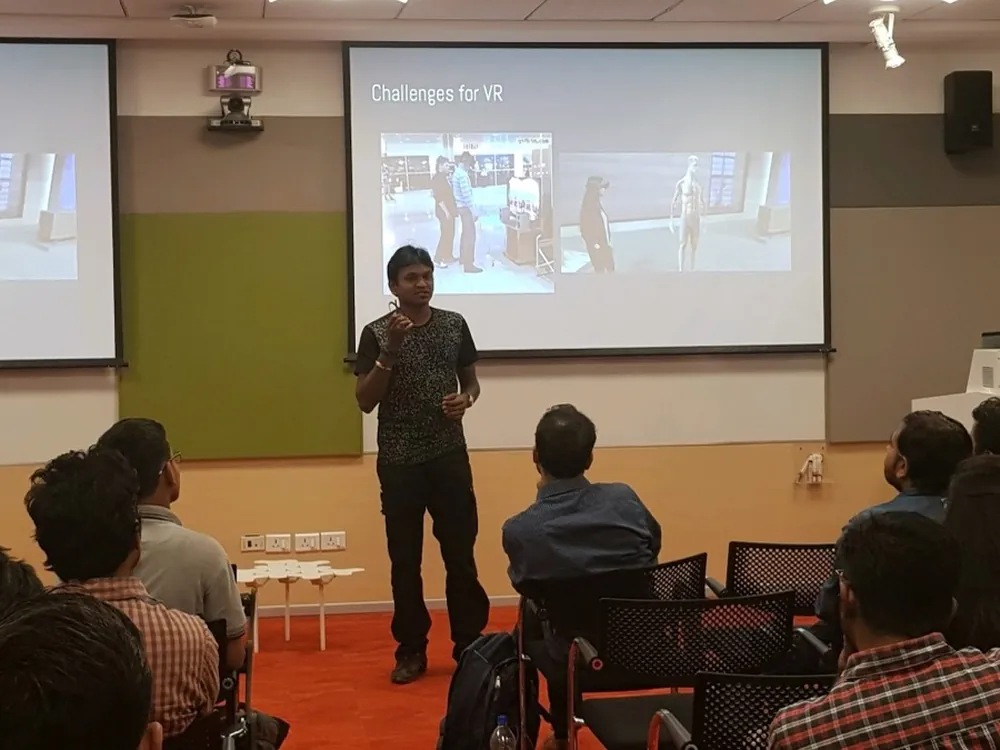
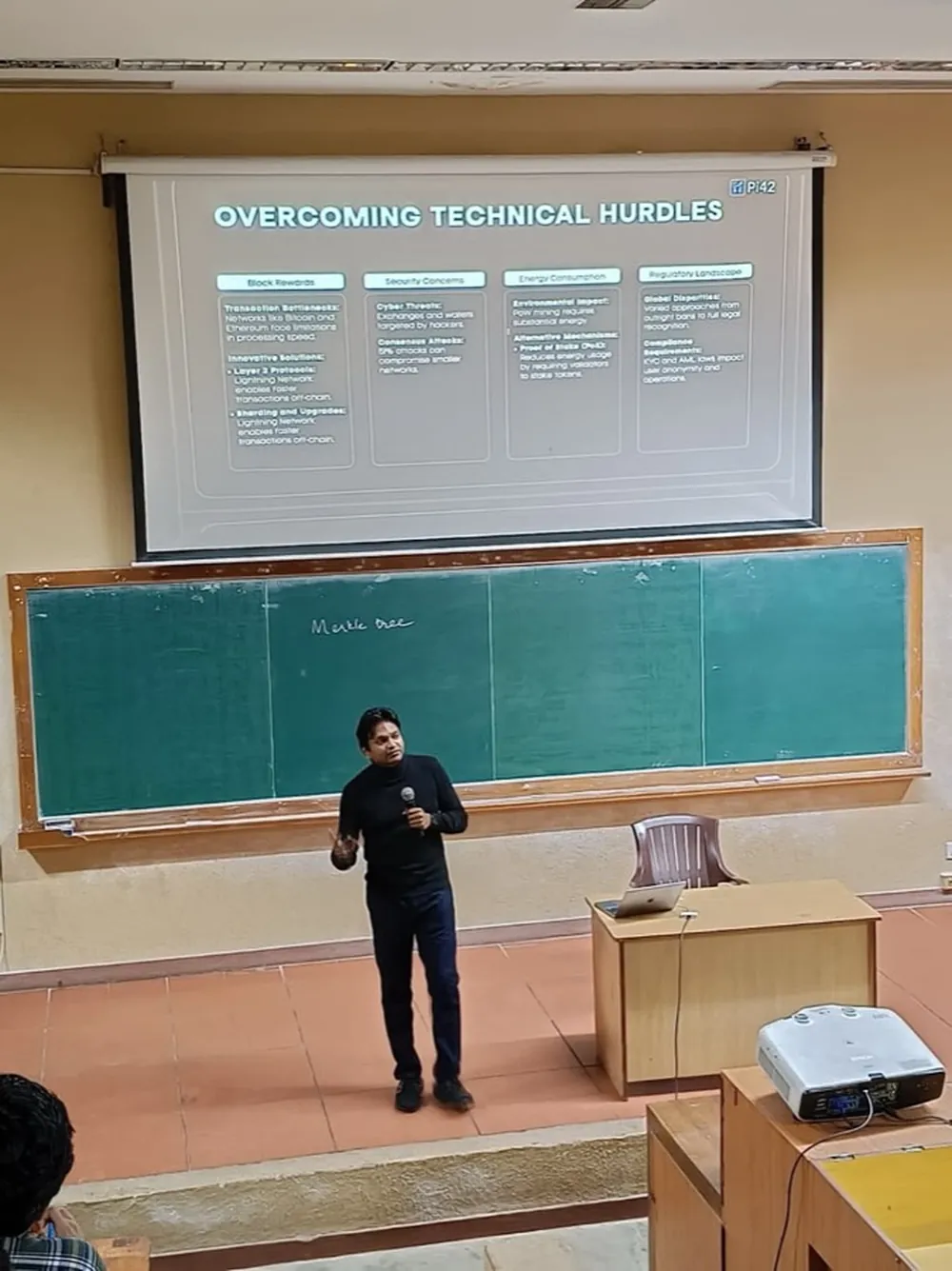

None of which makes the privacy claims true — the architecture page and the source do that, and you can run a proxy and check. It just means they were made by someone who knew what he was choosing not to build.
Get in touch.
contactI'm Karthikeyan. I built DailyVox because I needed it. Turns out other people need it too.
If you have questions, feedback, or just want to say hi —
Start talking.
Free. Private. No account needed. Just open and talk.